
Does your company manufacture or market hydroalcoholic disinfectants or antiseptic products? If so, ECHA’s latest decision marks the beginning of a new regulatory phase for biocidal products containing ethanol.
On 23 February 2026, ECHA’s Biocidal Products Committee (BPC) adopted a positive opinion supporting the approval of ethanol as an active substance for Product Type 1 (Human hygiene), Product Type 2 (Disinfectants and algaecides not intended for direct application to humans or animals) and Product Type 4 (Food and feed area).
This is one of the most significant regulatory developments for the European disinfectants sector in recent years. On 23 June 2026, the Competent Authority Report (CAR) was published, providing the reference values and scientific conclusions that Competent Authorities will use when assessing product authorisation dossiers. Autoridades Competentes usarán para evaluar los dosieres.
What does this mean for your business? There is no longer any need to speculate about the evaluation criteria. They are now clearly defined. Companies that prepare their dossiers based on the CAR from the outset will be better positioned to submit robust applications, reduce the likelihood of questions from Competent Authorities and minimise delays during the evaluation process. Those who wait are likely to face increasing competition for regulatory resources as more applications enter the system.
Good news: the CMR discussion will not block the market
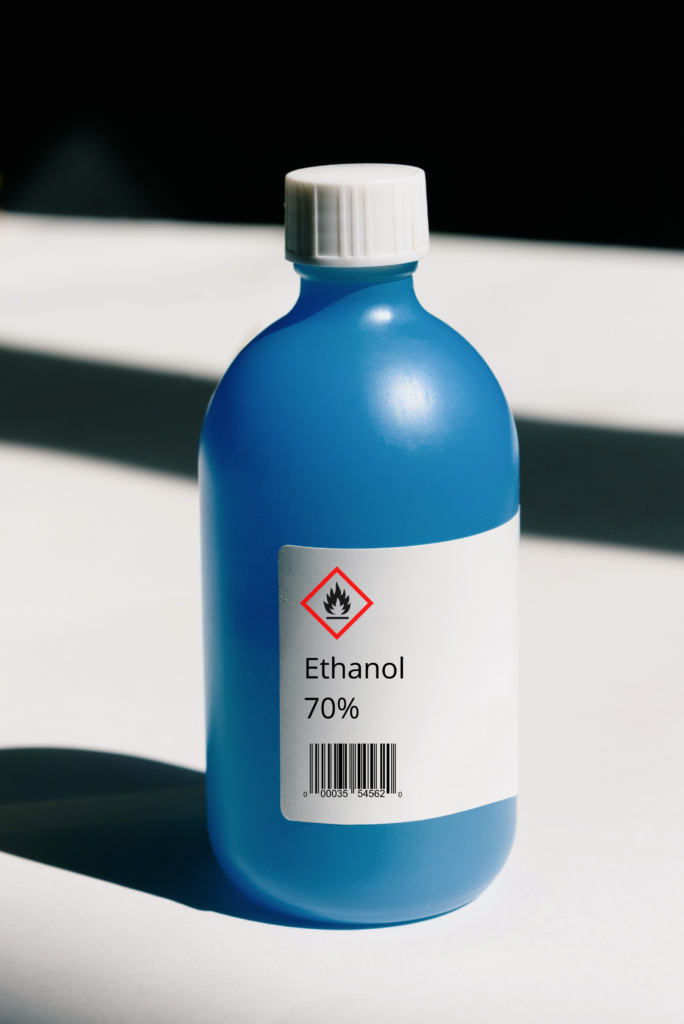
One of the key issues discussed during the evaluation was whether ethanol should be classified as carcinogenic or toxic for reproduction based on its effects following oral consumption. The BPC concluded that there is insufficient evidence to extrapolate those hazards to biocidal exposure routes, namely inhalation and dermal exposure.
As a result, ethanol is neither excluded under the Biocidal Products Regulation (BPR) nor identified as a candidate for substitution. This means that the regulatory pathway remains open for ethanol-based biocidal products.
Important: if not properly managed, each of these aspects may result in comments from the Competent Authority, months of delays, unexpected additional costs, and ultimately a product that cannot be placed on the market on time.
BPR product authorisation procedures are lengthy, technically demanding and increasingly competitive. Companies that incorporate the CAR conclusions into their regulatory strategy today will reach the market with stronger dossiers and a smoother evaluation process.
Starting early allows you to:
At ServiREACH, we specialise in regulatory affairs for biocidal products and support companies throughout every stage of the BPR authorisation process, including:
Let’s discuss your dossier: Contact our team to discuss how we can help position your products for a successful, efficient and compliant authorisation process under ECHA’s new evaluation framework. Don’t let regulatory complexity delay your market entry. We help transform new regulatory requirements into a competitive advantage.